

Why Cadaver Perfusion Matters in Medical Device Development and Training
Why Cadaver Perfusion Matters in Medical Device Development and Training
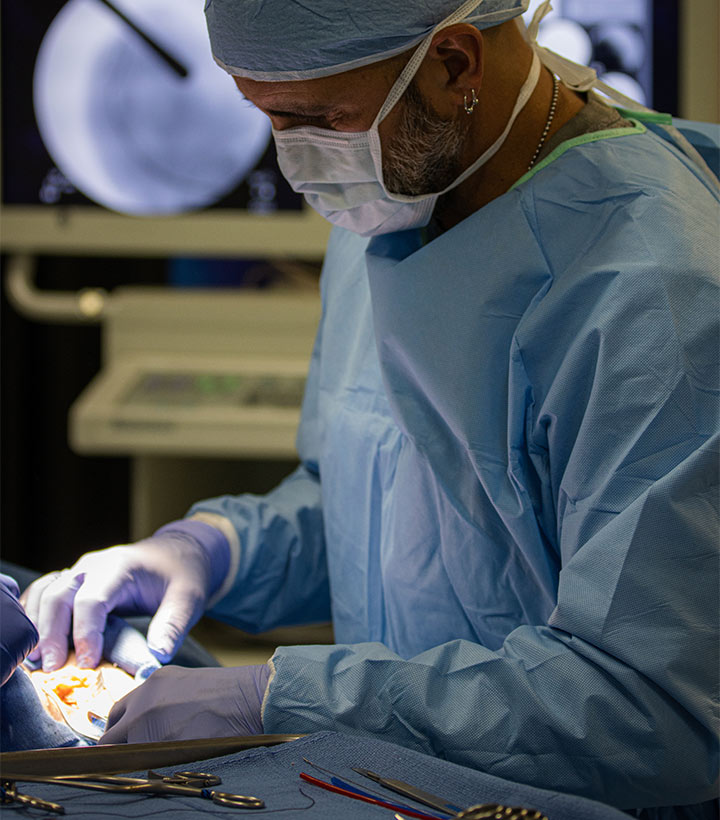
When a medical device is designed for use inside the human body, there is only so much a benchtop model can tell you. Engineers can test mechanics. Teams can evaluate materials. Simulators can help teach a sequence of steps. But once a physician has to navigate real anatomy, manage tissue, respond to bleeding, or deploy a device under imaging, the training environment needs to become much more realistic.
That is where cadaver perfusion becomes especially valuable. By circulating fluid through the vascular system of donated human tissue, perfusion turns a static cadaveric model into a more dynamic training environment. For medical device companies, that can mean better product feedback, more realistic physician education, and a clearer understanding of how a device or procedure performs in human anatomy before it is used clinically.
At Axis Research & Technologies, perfusion is one of the ways we help medical device teams create training and research programs that are built around the procedure, the technology, and the experience they want physicians to have.
What Cadaver Perfusion Adds to a Bioskills Lab
A traditional cadaver lab is already one of the most valuable tools available for surgical education because it gives physicians access to real human anatomy. Perfusion adds another layer of realism by introducing controlled flow and pressure into the vascular system.
Depending on the model and the goals of the program, this can help recreate elements of a live procedure that are difficult to demonstrate in a static specimen. Physicians may be able to visualize flow, work through vascular access, or evaluate how a device behaves under more realistic procedural conditions.
The goal is not to recreate every aspect of living physiology. The value comes from creating a more clinically relevant environment for the specific skill, device, or procedure being evaluated.
More Meaningful Device Evaluation
For device companies, one of the biggest advantages of perfusion is the quality of feedback it can generate. A device may perform exactly as expected on the bench, but physicians often identify different opportunities once they can use it in human anatomy and work through the full procedural workflow.
A perfused cadaver model can help teams observe device placement, access strategy, deployment, visualization, ergonomics, workflow, and the interaction between the device and surrounding anatomy. These sessions can also reveal small but important details: where a handle feels awkward, where visualization becomes difficult, where an extra step slows the procedure, or where a physician naturally uses the product differently than the development team expected.
That feedback can be useful during product development, design refinement, preclinical work, and preparation for physician training. It gives cross-functional teams a shared environment to see the procedure from the physician's perspective rather than evaluating the device in isolation.
Physician Training That Feels Closer to the Procedure
The best physician education programs do more than explain how a device works. They give physicians the opportunity to understand how the device fits into the procedure as a whole.
Perfusion can make that experience more realistic because the physician is not simply following steps on static anatomy. There may be flow to manage, imaging to interpret, access challenges to work through, and procedural decisions to make along the way.
That matters when a company is introducing a new technique or a device that changes an established workflow. Physicians need time to become comfortable with the technology, but they also need the chance to understand what the procedure feels like when conditions are less controlled. A hands-on perfused cadaver lab provides room to ask questions, repeat difficult steps, troubleshoot, and learn before those decisions have to be made in a clinical setting.
Particularly Valuable for Vascular and Minimally Invasive Technologies
Perfusion is especially useful when blood flow, vascular access, catheter movement, or imaging is central to the procedure. That makes it relevant across a wide range of specialties, including cardiovascular, peripheral vascular, neurovascular, interventional radiology, structural heart, trauma, and other minimally invasive applications.
For catheter- and wire-based technologies, for example, the educational value is not limited to reaching a target location. Teams may want physicians to evaluate access, navigation, deployment, device retrieval, or how the procedure appears under fluoroscopy. In surgical applications, the focus may be vessel management or how a new tool changes the operative approach.
A well-designed perfusion program starts with the objective and builds the model around it. The most effective setup is not necessarily the most complex one; it is the one that gives the participants the right level of realism for what they need to learn or evaluate.
A Better Environment for Cross-Functional Collaboration
Medical device development rarely belongs to one department. Engineers, clinical teams, product managers, physician faculty, sales training teams, and medical education groups may all be looking at the same technology from different perspectives.
A perfused cadaver lab gives those teams a common point of reference. An engineer can see how the device is actually handled. A clinical specialist can evaluate the procedural workflow. A physician can explain why a step feels intuitive or where it creates difficulty. The product team can listen to that feedback in real time and connect it back to design, training, and commercialization decisions.
That kind of collaboration is difficult to reproduce in a conference room. In the lab, the conversation is centered on the anatomy, the device, and the procedure taking place in front of the team.
Supporting a Stronger Product Launch
Training is often one of the most important parts of a medical device launch. A physician may understand the clinical need and the intended benefit of a new product, but adoption depends heavily on whether the technology feels practical, repeatable, and manageable within the physician's existing workflow.
Hands-on training gives physicians an opportunity to build familiarity before they use a device in practice. Perfusion can strengthen that training when the device depends on vascular behavior, visualization, or other dynamic procedural elements.
It also allows companies to build education around real questions. Which part of the procedure needs the most repetition? Where are physicians likely to hesitate? What troubleshooting scenarios should faculty address? What should a clinical specialist be prepared to support during early cases? Those insights can improve not only the lab itself, but also the broader training strategy surrounding a launch.
Why the Lab Setup Matters
Perfusion is only one part of a successful bioskills program. The specimen, equipment, imaging, instrumentation, room setup, faculty plan, and technical support all need to work together.
That is why planning the lab around the objective is so important. A development session may require a different setup than a physician education program. A vascular course may depend heavily on fluoroscopy and access planning, while another program may need a specific surgical approach, instrumentation set, or room configuration.
At Axis Research & Technologies, our team works with medical device companies to build programs around those needs. With bioskills lab locations in Houston, Irvine, Nashville, and Columbia (MD), Axis supports hands-on research and training programs across multiple specialties and stages of device development.